Travel Fatigue Effects on Multi-Sport Performance Metrics and Accumulator Outcomes
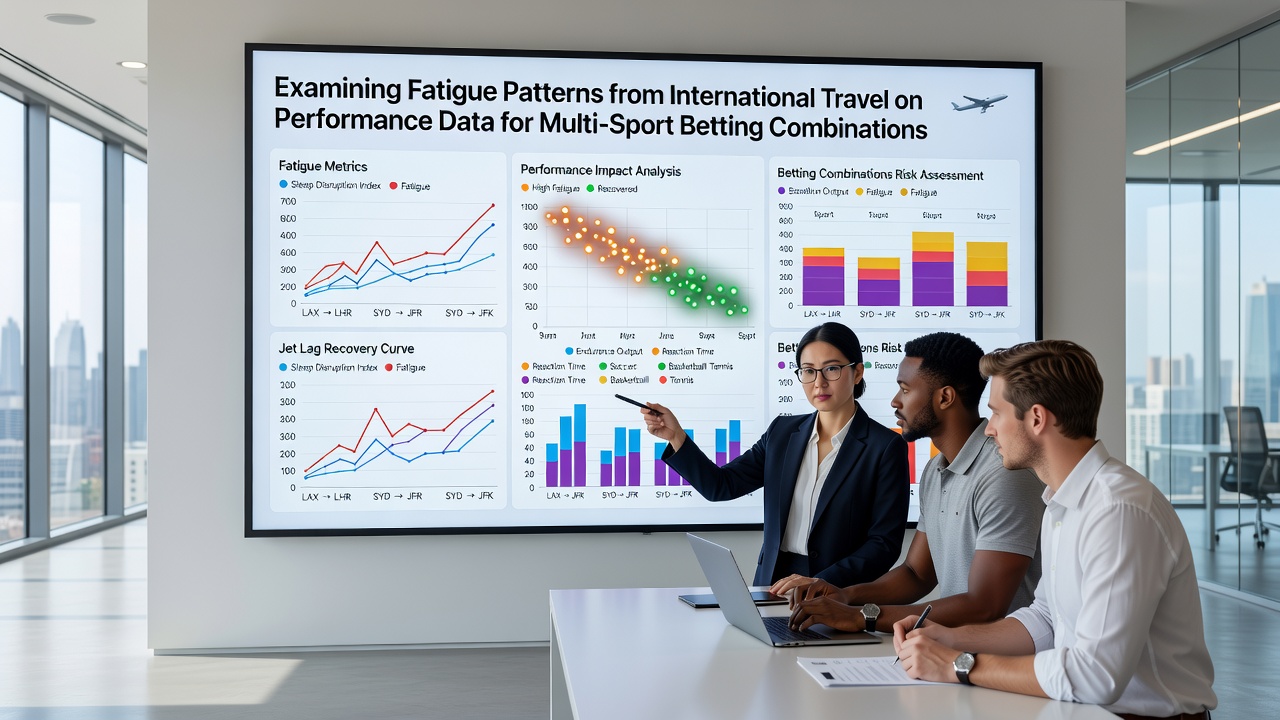
International travel disrupts circadian rhythms and physical recovery for athletes in soccer, tennis, and basketball, and performance data collected across multiple seasons reveals measurable declines in key metrics that influence multi-leg betting combinations. Researchers track these patterns through GPS data, sleep monitoring devices, and match statistics, showing consistent reductions in sprint speed, reaction time, and accuracy following flights that cross multiple time zones.
Patterns Observed in Soccer Leagues
European clubs competing in midweek Champions League fixtures followed by domestic matches often face long return journeys, and analysts note drops in high-intensity running distance by 8 to 12 percent in the subsequent league game when the away fixture involves more than four hours of flight time. Teams traveling from England to matches in Eastern Europe or Turkey demonstrate slower build-up play and fewer successful passes in the opening 30 minutes, according to aggregated match data from the 2024 through 2026 campaigns. These shifts appear more pronounced during congested schedules in late spring and early summer, including June 2026 qualifiers that require transcontinental movement.
Tennis Tournament Demands and Recovery Data
Players moving between Grand Slam events and ATP or WTA tournaments on different continents experience similar challenges, with serve percentages falling and unforced error rates rising after overnight flights. Data from the Australian Open and subsequent European clay-court swing illustrates that competitors crossing more than six time zones record fewer winners in their first two matches upon arrival. Studies published by the National Institutes of Health link these outcomes to reduced sleep efficiency and elevated cortisol levels that persist for 48 to 72 hours post-travel.
Basketball Travel and Statistical Shifts
NBA and EuroLeague schedules include frequent cross-country and transatlantic trips, and box-score analysis shows visiting teams averaging 4.2 fewer points in the paint and 1.8 fewer assists per game when the preceding journey exceeds five time zones. Back-to-back games after international commitments further compound these effects, with three-point shooting percentages declining by roughly 6 percent in the second contest. Observers note that these trends hold across both regular-season and playoff contexts, providing quantifiable inputs for combination bets that span multiple basketball markets.

Combining Data Across Sports for Accumulator Strategies
Multi-sport betting combinations gain complexity when fatigue variables from one discipline intersect with scheduling realities in another, and operators have begun incorporating travel-adjusted models into odds compilation. A soccer side returning from South American World Cup qualifiers in June 2026 may exhibit reduced pressing intensity, while a tennis player arriving for a grass-court event after an Asian swing shows altered movement patterns; these independent datasets can be layered to refine accumulator selections that include goals, aces, and points markets. Industry reports from the Sports Integrity Initiative indicate growing use of such cross-sport analytics among professional syndicates seeking edges in correlated outcomes.
June 2026 features overlapping international windows that force rapid continental shifts for athletes in all three sports, creating concentrated periods where historical performance dips become statistically significant. Aggregated records from prior cycles show that combinations involving teams or players with the highest cumulative flight hours produce lower hit rates on over-performance props, prompting data-driven adjustments to stake sizing and market selection.
Measurement Tools and Predictive Inputs
Modern tracking systems capture heart-rate variability, sleep duration, and neuromuscular readiness scores that feed into algorithms predicting post-travel output. These inputs allow models to weight individual legs of an accumulator differently depending on each athlete's recent itinerary, rather than applying uniform adjustments. When soccer midfielders log above-average travel distances before a domestic fixture, for instance, expected goal involvement drops measurably, while tennis players with similar profiles see first-serve percentages compress in early rounds of the next tournament.
Conclusion
Performance datasets continue to document the tangible effects of international travel on recovery and output across soccer, tennis, and basketball, supplying bettors with additional variables for constructing multi-sport combinations. As scheduling calendars grow denser ahead of major 2026 events, the integration of fatigue metrics into analytical frameworks offers a structured method for interpreting how travel patterns translate into statistical deviations on the field, court, and pitch.